
Close
Without a predetermined plan, beginning software development is a recipe for overspending, delays, and costly failures. More and more businesses are relying on Software Development Life Cycle techniques to help them provide high-quality software as fast, safely, and economically as feasible rather than rushing into projects.
The software development life cycle is a collection of corporate best practice frameworks for creating software applications. The process of creating software is drawn out and time-consuming.
A better plan, design, development, testing, and deployment of information systems and software products are all made possible by the software development life cycle. It also holds for developing bespoke software.
This article covers all the information a business needs to adopt SDLC-based software development. We explain what SDLC is, dive deep into each typical phase of a product's life cycle, and present the market's most reliable SDLC methodologies.
Also Read: How to Choose the Right Software Development Company
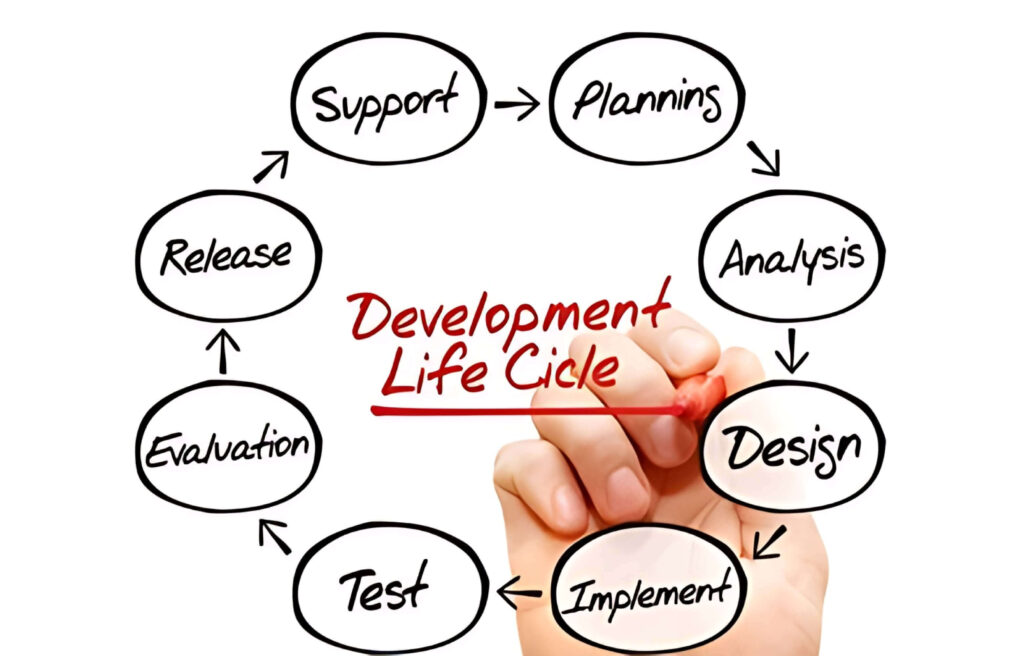
A comprehensive explanation of all the phases of software development, including planning, coding, testing, and deployment, is called an SDLC.
Companies create customized SDLCs to create a solid, iterative framework that guides the team through all crucial development stages.
Every software-related project can have a tried-and-true foundation thanks to an SDLC strategy for a company.
Teams develop high-quality products with more speed and consistency while the company maximizes its ROI by boosting its ability to meet deadlines, keep projects within the assigned IT budget, and maintain high code quality standards.
The objective of the SDLC is to specify tasks for each stage of the software development process in order to reduce errors and mistakes. That’s how you’ll master engineering project management.
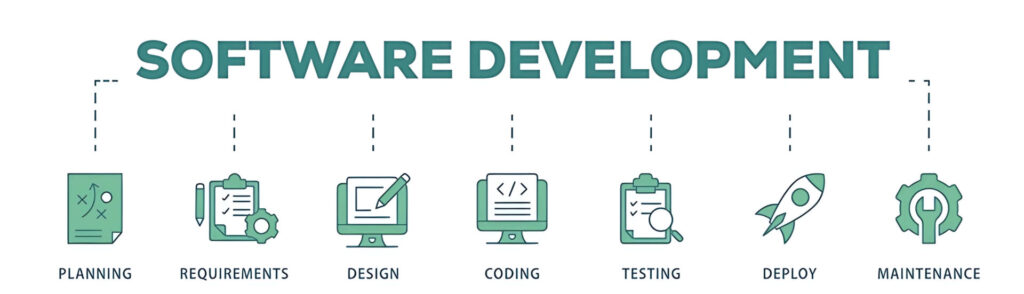
The "Planning" phase is where the Software Development Life Cycle (also referred to as Loop) starts. Before you start the planning stage, ensure that you have a proper understanding of the software development life cycle.
The planning phase in SDLC is probably the most critical part of the Cycle, as it sets the project’s success potential. Professional software developers will make project plans during the planning or feasibility stage.
During this phase, project and product managers confirm the allocation of resources, plan capacity, and determine the schedule and cost of the project before communicating the details.
Our software will be roughly defined during the planning stage, and a feasibility study will be conducted in the following areas: technical, operational, financial, human resources, and legal/political to determine whether it is feasible.
You can create a system with analytics and issue-tracking management using this stage. Your team and the users will both benefit from this. In this stage, developers also have the chance to plan and produce a minimal viable product (MVP) without spending further effort on unneeded work.
The most important objective that the planning stage accomplishes is that it provides a timeline and cost for the project. One of the main causes of software development outsourcing failure is a lack of planning.
Another major objective of the planning stage is to secure the funding and resources needed to materialize the plan.
In the analysis stage, skilled software developers gather all the specific details required for a new system. This is one of the most important software development life cycle phases where stakeholders sit down to discuss the purpose of the software.
The skilled software application engineers will: during the analysis stage.
Software engineers will draft an SRS (Software Requirement Specification) document during the analysis phase. All of the specifications for the software, hardware, and network requirements needed to build the bespoke program will be included in the SRS document.
One of the most crucial phases of the software development process is the analysis stage. Whether you hire remote software developers or have in-house software developers, you must make sure that this stage is accomplished. Additionally, at this point, the team is able to recognize any potential issues and fix them quickly.
Once there is an approved project direction, the team starts creating a design plan that explains all the major aspects of the new product.
Throughout the design process, the technical details of a project are selected and defined. For instance, the design phase could involve developing screen designs, prototypes, process diagrams, and system interfaces, depending on the project's nature.
The custom software development team will start working once the design is approved. Designers choose the architecture, programming language, platforms, and user interface designs during this stage. This phase effectively takes the product vision and specifies how that vision will be realized.
During the development phase, the custom software's code will actually begin to be written by the offshore software developers. The development phase is where the actual coding and building of the software take place before it is created, based on the requirements and design forms.
We advise using agile methodologies to expedite coding because this step is typically the most time-consuming part of the SDLC.
Software that is operational and satisfies all of the SRS and DDS requirements is the result of this phase. The team should already run the product through fundamental tests (such as static code analysis and code reviews for various device kinds) even though advanced testing for the code is still pending.
Top software developers can choose from a wide variety of programming languages like Java, C++, or PHP, depending upon the project requirement and the skill set of the developers.
It's time to test the program after it has been developed as a prototype since it is crucial to do so in order to identify any flaws and errors. The testing phase in SDLC verifies that the software functionality meets the defined requirements and prevents major defects from being shipped to end-users in production.
A combination of automated and manual testing takes place during this phase. The testing team typically runs many tests, including unit, integration, performance, and functional testing. This phase embodies the completion of work.
In parallel with Deployment events, product teams partner with marketing and customer teams, get the message out to users, update them on changes, and announce the release of a new product or feature.
The product has left the testing phase and is ready to go into production. Pushing the code into the production environment is a component of the deployment step. On some projects, the group is required to produce instructional films or user manuals before the product is made available to end users.
The deployment step should, ideally, occur automatically (usually as part of CI/CD). Companies with lower maturity or in some highly regulated industries may require manual approvals during this SDLC stage.
Most companies deploy new software to a small percentage of users (10–15%) and slowly phase it into the rest of the customer base. A gradual introduction means you limit the impact on the UX if there's an overlooked issue with the product.
Maintenance phase in SDLC Sometimes referred to as the “monitoring” phase, this last part of the software development life cycle is ongoing. Once the software is created and ready to use, it requires ongoing maintenance.
Some software programs may also require updates, bug repairs, and enhancements in order to be incorporated into fresh settings or with fresh systems. After deployment, DevOps teams work to maintain the product's stability and availability for all users.
However, instances do occur when members of the on-call team must move fast to address problems as they develop in order to reduce downtime. Because consumers depend on your product for its intended usage in production, maintaining the software is just as crucial as developing it.
The Waterfall model in SDLC is the oldest and the most straightforward SDLC model on the market. As suggested by its name, the stages in this model flow from top to bottom like the water in a waterfall, without missing a single rock along the way.
This model comprises a separation of tasks from requirements, design, development, and testing. This model stipulates that each stage must be finished before the subsequent stage can begin. The next stage cannot start when the previous stage is not completed.
The sequence must be adhered to from the beginning to the end of the project. It’s a model that most bigger projects adopt. But the problem here is that it is quite inflexible, and we don’t feel comfortable using it in our projects.
Because software development is a very personal project that ultimately needs maintenance, the waterfall model's rigidity may lead to a large number of required improvements down the road.
The V-Model (or the Verification & Validation model) is an extension of the Waterfall model where the development happens in a “V” shape. Testing is a step in every stage of development that helps find any potential flaws or issues.
In the V-Model, each software development stage is followed by a test stage. Only after passing the corresponding test can the subsequent phase start. It has strict obedience to a set timeframe.
It highlights the flaws of the robust waterfall approach to avoid out-of-control growth issues.
The Agile Model focuses on two areas: cross-functional development and regular release. The Agile Model manages each project uniquely using a process that is adapted to fit the requirements of each project.
Agile is based on incremental and iterative development. By using this model, you deal with minor issues earlier on in the project as opposed to leaving them for the more difficult phases.
In the Agile model, the work is done over small (2-4 weeks) iterations with their own software development life cycle at the end of which a working version of the software is released and presented to the customer. To keep everything organized, you should use project management software.
Due to the repetition in the process, this model is very adaptable and resembles the iterative model more. It is a combination of the architecture stage and the prototyping stage. The spiral model has different phases throughout, where each product is released and then refined.
To enable the ability to identify and manage risk, the prototype can also be developed throughout each step. Most often, it is used to bigger, more expensive undertakings. The "Identify," "Design," "Build," and "Evaluate" spirals in the spiral model are iterations that become more precise and well-defined with each spin through the model's four phases.
According to the Spiral model, each iteration results in the release of a fresh working version of the software, with the following (spiral) iteration incorporating customer feedback gathered during the "Evaluation & Risk Analysis" phase.
Repeating the software process is the main focus of the iterative model. This software development life cycle model allows engineers to develop newer versions of the software in a shorter time frame.
There is no need to go through the requirement stage; instead, a few changes are made, and a new product is created.
The model also allows developers to constantly provide updates for the software. Every iteration generally has Planning, Requirements, Design, Implementation, Testing, and Deployment stages. A workable software version is produced and released after each iteration.
The Big Bang model is a high-risk SDLC type that throws most of its resources at development without requiring an in-depth analysis at the start of the Cycle.
Little planning is done at the beginning of a big bang, which quickly progresses to the coding stage. Developers are frequently the only ones in charge of gathering requirements, writing code, and ensuring that a finished product is valid.
It is a model that is mostly used on small and academic projects. The Big Bang model is good for corporations that are working on a project without specific requirements or release dates.
Also Read: 10 Reasons Why Software Development is Very Important
Getting the right hands on your software project life cycle is the best way to translate your business ideas into a practically functional structure.
We at u492383997_GiwVH Solutions, develop software with higher speed, greater flexibility, and effective productivity. Your project's success will be ensured by the SDLC model you select with the assistance of our team. We deliver high-end modern soluti
accessibility in software Back end development Best CMS Best CMS for Website CMS Selection Criteria Cost of web Development Custom Software Custom Software Development E-commerce E-commerce website development Front-end development Guide for Mobile Development Services Guide for Software Development Services How to pick the best CMS Intuitive UI Design Mobile Development Guide Mobile Development Services Off shelf Software Off the shelf Development QA and Testing Quality assurance in software development SEO-Friendly CMS Selection software development Software development services Software development solutions software development technologies software development tools Software Testing software usability top software development technologies UI/UX Design UI/UX Design Services Usability testing User experience Web Development Company Web development cost Web development services
Enquire about your requirements and let's work together to maximise the value of any vision








Comment